What the 2026 Midterms Mean for Cannabis and Hemp in Ohio
Ohio voters elected Amy Acton as governor and sent Sherrod Brown back to the U.S. Senate. Massachusetts voted to keep its adult-use market, Idaho preserved the right to bring legalization to the ballot, and Houston changed how police will prioritize low-level possession. For Ohio’s hemp businesses, the most immediate developments are two federal deadlines that arrive before the new Congress takes office.
This Ohio Cannabis Expo roundup draws on Vicente LLP’s Nov. 10 policy briefing and public election, legislative and agency sources. Vote totals were still unofficial at the time of publication. Ohio Secretary of State election results
Ohio’s new governor and a question for consumers
Governor-elect Amy Acton campaigned on keeping Ohio’s voter-approved adult-use market legal. She has favored testing, safety standards and age limits for intoxicating hemp products and opposed broad bans, according to Vicente’s roundup and reporting cited by Ohio Cannabis Live. Republicans kept control of the General Assembly, while Democrats broke the Republican supermajority in the Ohio House. The split makes negotiations over future cannabis or hemp bills especially important. Ohio Cannabis Live’s reporting · Ohio House election coverage
Before the election, Ohio Cannabis Live founder Mastamynd asked Acton’s campaign whether she would meet with cannabis consumers if elected. That question now has practical stakes. A conversation could cover medical access and affordability, how home-grow rules work in practice, and what testing and age checks would mean for hemp consumers and retailers. Read the question Mastamynd put to the campaign
What voters decided in Massachusetts, Idaho and Houston
- Massachusetts. About 75% voted against Question 8, keeping licensed adult-use sales and home cultivation in place. The proposal would have limited the Cannabis Control Commission to the medical market. In 2016, about 54% voted to legalize adult use, roughly 22 percentage points below this year’s vote against repeal. 2026 results · Official ballot language · 2016 results
- Idaho. About 66% rejected HJR 4. The amendment would have given the legislature sole authority to legalize marijuana and certain other substances. Idahoans can still pursue a citizen initiative. The state has no medical cannabis program, and a separate medical proposal fell short of the signatures needed to get on the 2026 ballot. Idaho results and ballot background
- Houston. About 71% backed Proposition A, which makes misdemeanor marijuana possession the city police department’s lowest enforcement priority and also addresses no-knock warrants. Austin and Dallas have adopted similar low-level enforcement measures. Texas possession law still applies. Houston vote totals · What Proposition A does
Washington has three separate decisions ahead
Democrats won control of both chambers of Congress. Vicente’s Nov. 9 snapshot counted seven Senate pickups, giving Democrats at least 54 seats in the incoming majority, and at least 40 House pickups. The incoming Congress takes office in January, after both scheduled hemp deadlines. Associated Press race calls
- Hemp. On Nov. 12, certain products containing cannabinoids the cannabis plant cannot naturally produce are scheduled to lose federal hemp status. Most other changes to the federal hemp definition are scheduled for Dec. 11, including a 0.4-milligram cap per container on total THC and certain similarly acting cannabinoids in finished hemp-derived cannabinoid products. Kentucky’s Andy Barr and Minnesota Rep. Angie Craig proposed a federal regulatory framework in the Lawful Hemp Protection Act. Federal law, section 2019 · Congressional Research Service summary · Lawful Hemp Protection Act
- Banking. The House passed versions of SAFE Banking seven times across 2019–2022 and twice voted for bills to end federal marijuana prohibition. The 2026 SAFE Banking bill, introduced by Ohio Rep. Dave Joyce with Warren Davidson of Ohio and Brian Mast of Florida among its original cosponsors, would protect financial institutions that serve state-authorized cannabis businesses. Ohio’s Sherrod Brown chaired the Senate Banking Committee when it took up the related SAFER Banking bill in 2023. Brown has also backed federal decriminalization. Vicente also highlighted returning House members Jim McGovern, Brittany Pettersen and Jamie Raskin. 2026 bill text · Congressional banking history · Senate Banking Committee
- Rescheduling. The Justice Department has already moved certain qualifying medical marijuana products to Schedule III and announced initial federal registrations for qualifying dispensaries. The DEA’s broader rescheduling proposal remains in a separate administrative proceeding. The agency’s docket is where to look for orders and updates. DEA rulemaking docket · Ohio Cannabis Expo’s coverage of medical registrations
Vicente’s briefing also pointed to incoming senators with different records on cannabis. James Talarico (Texas) backed legalization and age safeguards for hemp. Josh Turek (Iowa) backed adult-use legislation, and Annie Andrews (South Carolina) supported legalization. Troy Jackson (Maine) backed banking access and a greater voice for medical growers and caregivers. Roy Cooper (North Carolina) urged decriminalization as governor, Abdul El-Sayed (Michigan) backed legalization and clearing nonviolent possession records, and Juliana Stratton (Illinois) endorsed federal legalization. Peggy Flanagan (Minnesota) was lieutenant governor when her state legalized adult use, while Chris Pappas (New Hampshire) supported removing cannabis from Schedule I and voted for banking reform. Barr’s hemp bill and past banking votes add a Republican voice to that discussion. Associated Press race calls
Four more statehouses to watch in 2027
- Pennsylvania. Gov. Josh Shapiro won reelection after proposing adult-use legalization in his budgets. Democrats flipped the state Senate, where a House-passed bill had stalled, giving them control of both chambers and the governor’s office.
- Wisconsin. Governor-elect David Crowley backed legalization. Democrats won an 18–15 state Senate majority and 53 of 99 Assembly seats. Wisconsin lacks a comprehensive medical cannabis program and a statewide citizen initiative process, so legalization would have to go through lawmakers. Wisconsin Public Radio
- Texas. Gina Hinojosa defeated Gov. Greg Abbott after calling for voters to have a say on THC policy. Vikki Goodwin defeated Lt. Gov. Dan Patrick, who pushed to ban hemp THC products. Democrats flipped the Texas House and Republicans kept the Senate. Hemp policy is likely to return when the legislature convenes in January. Texas Tribune election coverage
- Iowa. Governor-elect Rob Sand called for taxing and regulating cannabis like alcohol. The state has a limited medical program, and any expansion would need support from the Republican legislature.
Associated Press coverage of state government results · NORML’s state policy roundup
What Ohio Cannabis Expo is watching
Will the new administration invite patients, adult-use consumers, growers and small businesses into the same conversation? Over the next few months, the milestones to watch are Ohio’s first cannabis and hemp proposals, the federal hemp implementation dates, and any new movement on banking and broader rescheduling.
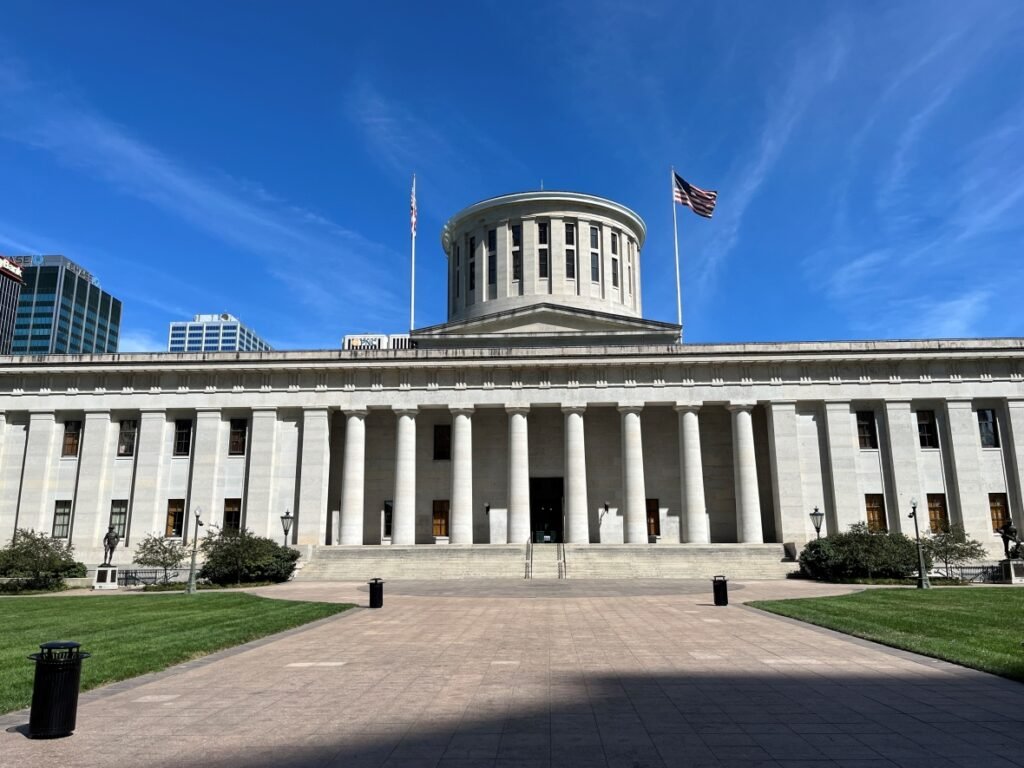
Featured photo of the Ohio Statehouse by the Capitol Square Review and Advisory Board (public domain).




Georgia will be entering the chat soon too
Test